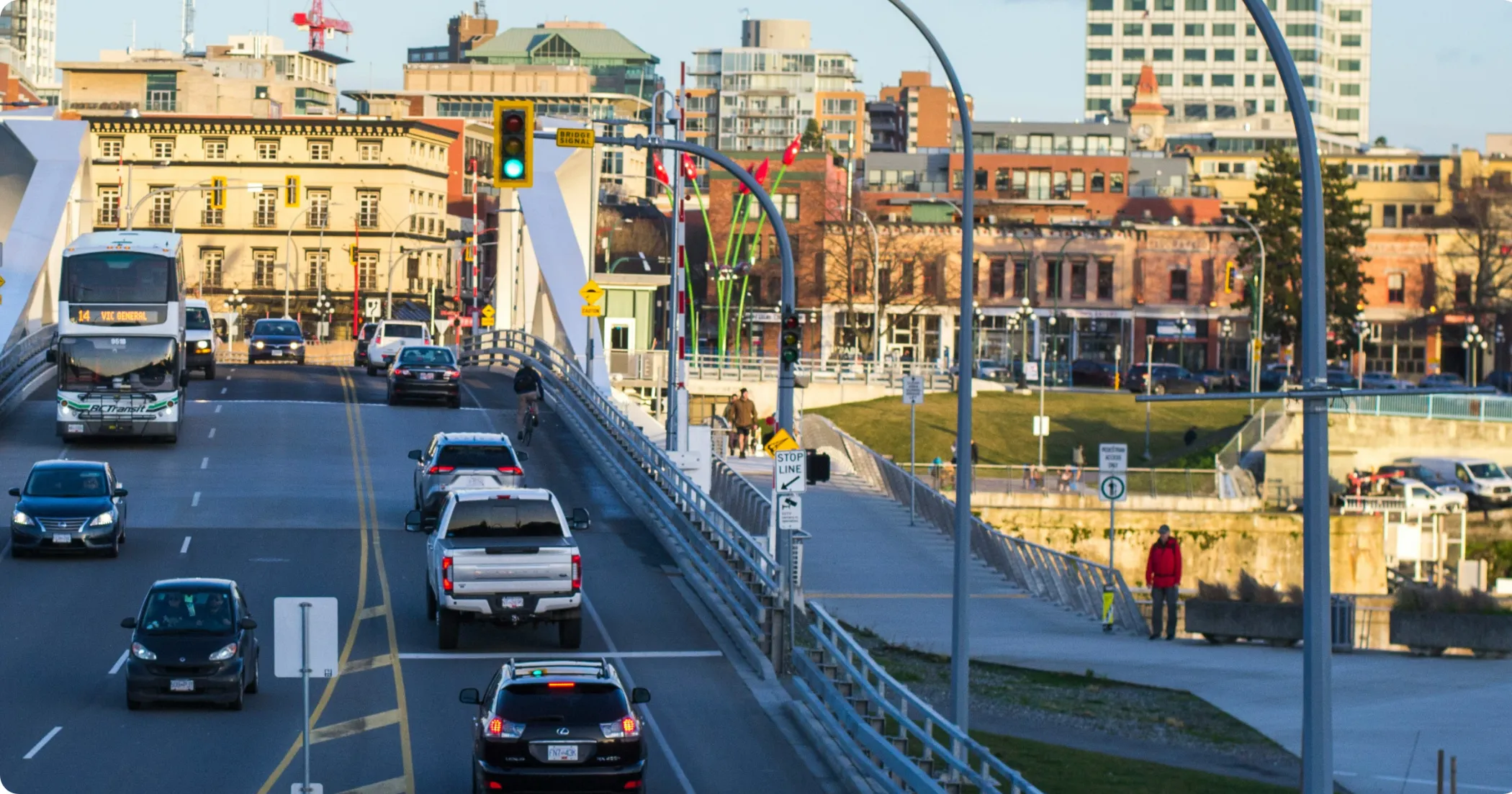
Transportation that works for everyone
Victoria’s transportation system has to work as a network, not as a competition between drivers, cyclists, pedestrians and transit users.
Transportation debates in Victoria too often get reduced to a contest between drivers, cyclists, pedestrians and transit users. I want to move past that and focus on whether people can get where they need to go safely, reliably and without unnecessary delay.
That means a safe connected cycling network, better transit, accessible streets and practical changes that reduce congestion, wasted time and needless conflict.
Victoria’s transportation system has to work as a network, not as a competition between drivers, cyclists, pedestrians and transit users.
Transportation decisions should be judged by how well the whole network works, not by which mode “wins.”
Make the Whole Network Work Better
Congestion wastes time, fuel and money. Unreliable travel also raises costs for businesses, tradespeople, deliveries, emergency services and transit.
As Mayor, I will push transportation decisions toward practical outcomes: safer trips, more reliable transit, less unnecessary delay, better accessibility and better movement across the whole network.
Victoria already has substantial cycling infrastructure and has made important safety improvements. The question now is how to make the entire transportation system work better together.
Safe Cycling Without the Bike Wars
I support a safe, connected cycling network. I do not support treating every bike-lane proposal, or every existing design, as beyond question.
I will protect cycling infrastructure that is safe and working, and change designs only where evidence shows a better overall result is possible.
Where evidence shows that a design is creating avoidable safety, accessibility, congestion, loading or commercial-access problems, City Hall should be willing to fix it.
That is good transportation management and consistent with supporting safe cycling.
Transportation decisions should be judged by their effect on the whole network, not by statistics selected to demonstrate that one particular investment is being used. More cyclists at one location may be useful information, but it does not by itself tell us what happened to congestion, transit use, safety, travel times, accessibility or the movement of people across the city.
As Mayor, I want City Hall to look for the best overall result, not simply evidence that a particular project achieved one of its intended effects. That means measuring the whole network, comparing trade-offs and being willing to adjust when a better result is possible.
Better Transit Is Part of the Solution
A stronger transit system gives more people a realistic alternative to driving and can reduce pressure on road capacity for those who still need to drive.
Victoria does not control BC Transit, but the Mayor can be a stronger advocate for frequent, reliable service, better regional connections and infrastructure that makes transit faster and more dependable.
Transportation does not stop at municipal boundaries. As Mayor, I will push for stronger regional coordination on congestion, commuter movement and long-term transportation planning, with clearer shared priorities and better public reporting on whether those efforts are actually improving how people move across the region.
Streets Have Many Jobs
Roads are also workplaces and service corridors. They need to accommodate buses, emergency vehicles, deliveries, tradespeople, taxis, people with disabilities, commercial loading, and access to homes and businesses.
Many residents and businesses are concerned that transportation planning has recently seemed to optimize for one objective at a time without fully accounting for the effects on transit, accessibility, emergency response, deliveries, commercial access and congestion elsewhere in the network.
As Mayor, I will insist that major transportation changes be assessed against the whole system, with those competing needs considered before decisions are locked in rather than repaired afterward.
Measure Results and Keep Improving
The City already collects substantial transportation and collision information. As Mayor, I will push for clearer public reporting on the measures residents actually experience: travel times, transit reliability, safety, accessibility, commercial access and whether major changes improved or worsened overall network performance.
Good management is not just asking whether something worked. It is asking whether it can work better.
That means looking at trade-offs across the whole network, not just whether one project met one target. If results weaken, circumstances change, or a better approach becomes clear, adjust quickly.
Transportation policy should also help move Victoria beyond the culture war over how people travel. Drivers, cyclists, pedestrians and transit users should not be treated as competing political camps. The goal is a system that works better for everyone.
Because congestion and transportation networks cross municipal boundaries, as Mayor I will advocate for stronger regional coordination and a long-term CRD transportation vision that improves safety, reliability, accessibility and movement across the whole network.